
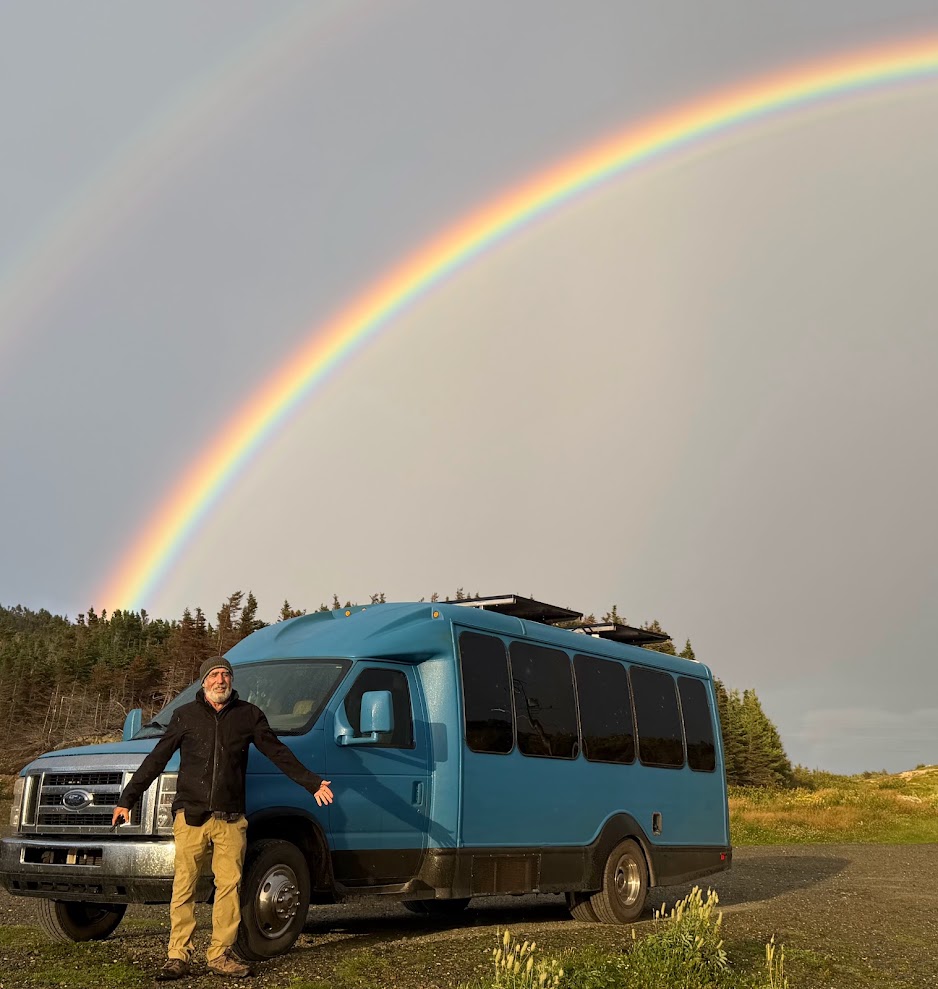
Funny thing. I’d intended to write a post about the best and worst parts of life on the road, and after some thought and a few draft lists, surprise! They turned out to be one and the same! All the “worst” things were blessings in disguise. All the best things had pronounced downsides. In other words, everything that makes nomad life so awesome also makes it difficult and challenging.

And so this is a list of best/worsts. (Or worst/bests). Because isn’t that the nature of things? Some of the most amazing aspects of life on the road are also the absolute pits. Like two faces of the same coin. There’s no separating the two.

How It All Started And How It’s Going
This list is a long time coming. Dan and I have been living on the road for over four full years now. We started out with our (dear) low-top econoline van, Stevan, our elderly family dog Milo (also very dear). We had one single Jackery powerstation with one single folding 200 watt solar panel. Seriously no frills!

We were “empty nesters”, ready for a change, and giddy with the excitement of heading off into the big wide world, untethered from work-a-day routines and house related chores.

The transition was an easy one. We were used to long car-camping road trips, and living our little van home felt like the best kind of luxury. Maybe we took it too far in those first few months, getting stuck at the far end of a muddy road in Wyoming, accidentally heading down an ATV trail in the Black Hills. And there was that time we got snowed in Utah. Rookie mistakes!

We learned to manage the constant togetherness of living in 77 square feet and to worry less about each night’s camp spot. In short, we became nomads.

And we’ve continued for a good long stretch. There’s no such thing as a “pro” nomad, but we definitely have learned a few things.
And one of those things is that conventional wisdom isn’t always wisdom at all. And the way you look at things is (often) more important than the thing itself. Hence this quirky list of “best/worsts.”
So what are the best and worst things about life on the road? Here’s our list:

1. The Constant Unknowns
When you live on the road, “unknowns” come fast and furious. Need to refill water or food or propane? Need laundry, showers, or beer? Want to find a safe place to camp? As a nomad, you’re always in a new place and figuring out how to meet your everyday needs is a big part of life on the road.

The internet helps. Maps and apps are key. But they don’t tell the whole story. Whatever the online reviews say, you just never quite know what you’ll find when you pull up in a new spot. Could be sketchy, could be awesome.
In our opinion, the constant unknown is both one of the best and the worst part of life on the road. Learning a new place is part of the fun. We love exploring quirky little thrift stores and specialty food markets, trying local restaurants and local beers, checking out new libraries and coffee shops and all sorts of things. Even doing the laundry is an adventure of sorts.


We’ve had “picnic lunches” in local parks across the US and Canada, walked dozens of main streets, and sampled local delicacies in so, so many towns. And we’ve driven hundreds of iffy, dirt roads to find a beautiful dispersed campsite…or a place to turn around. It’s exciting and envigorating to live on the road. The same-old same-old is never the same.

But those same unknowns are also one of the worst things about nomad life. There are times you just can’t find the things you need. Other times, you end up in a sketchy part of town or a spot with a shiny new “no overnight parking” sign you didn’t expect. We’ve overnighted in a trash strewn Texas town park in a thunderstorm and, and watched sketchy transactions go down a few feet away. Ditto at a park-up in Northern Quebec. And there are times where nothing pans out and we’ve driven late into the night trying to find a spot. We’ve struck out finding propane or water or showers. And had to shrug and make do. Not knowing an area can be creepy or dangerous or just, impractical.

The constant unknowns are both the best and worst part of this lifestyle. They can be both — in the same day.
2. No Limits/Lots of Limits
Life on the road is about freedom, right? Nooooo limits! You can go anywhere, do anything, untethered to the cycle of bills that define much of “modern life.” Don’t like a place? Just get up and go somewhere else! In a house, everything happens automatically. Your electricity flows unseen, water too, and a gazillion other things. You have only so much control over your costs of living. Not so in a van or bus.

As fulltime nomads, we largely have control of our monthly costs. We can move to somewhere warmer, or we can hunker down and wait out a storm. We can slow our roll if gas prices are too high, or speed through an area overnight. We love this feeling of autonomy. Freedom is the name of the nomad game.
But nomad life is also about limits.

Because, no matter your MPG, or the size of your water tank, fridge, solar panels etc., you can only go for so long without restocking.
Strangely, these limits are also awesome. It is freeing to be aware of what you need and what you use. We have little waste and buy only what will fit in the fridge and cupboards. When keep a running shopping list and cook some “creative” meals when the list gets long.

On the road, managing our resources is much more hands-on than the passive get-and-spend system of modern life. We love this aspect of living of the road.
Buuuut this kind of freedom comes with built in limitations. And sometimes these kind of suck. When we are parked up somewhere beautiful and wild, we need to conserve almost everything if we mean to stay. We stretch our water, food, and propane. If it is rainy or cloudy, we ration our electricity and internet use. And we stretch even our clean clothes.
In cold, we snuggle down and hole up like the wild things outside our door.

Surprisingly, we sort of like all this attention to the needs of daily living. For me, it is truly one of the best parts of life on the road. Because, when these things don’t come easy, your awareness of them shifts. You take less for granted and value what you have a little more.
We appreciate all these everyday things so much more when we have to think about them. When our batteries and water tanks are full, we feel so well-off. Ditto for an empty laundry bag and a pile of clean clothes. There is joy in “just enough.” Limits are sort of lovely.

….And they are a constant pain in the neck! Ever brush your teeth with a teaspoon of water? Wait a week to shower? Wear the same pair of jeans for several days running? Well, we have. Some things really stretch the limits of our enjoyment of limits.

Dark rainy days are the bane of our nomadic existence. Ditto with cold weather. And don’t get me started on snow! If you’ve ever had to sleep with a hat and gloves, you know what I mean. Some nomad-life limitations are just…. ugh. But a little discomfort is part of the nomad deal. And some limits are just something to be endured — not fun or enlighting at all.

3. Community/Lack of Community
When we hit the road, we left our small, tight-knit community in rural Massachusetts behind. No more running into people at the grocery store or waving to neighbors on our country road. We gave up the get-togethers and cycles of local life. No town meetings in May. No fairs and fireworks and local traditions for us. But we didn’t leave community behind. Being nomads brought us into a whole new kind of community — one based on long distance connection and every-once in a while meet ups.
We’ve been surprised at how welcoming the nomadic community is. Our circle has expanded in unexpected ways. And we love it!

Part of this is due to the lively online community. There are many of you out there who we consider friends though we have never met in person. And there are other folks who we’ve met in campgrounds and parks, hot springs and breweries, who have become part of a wide-ranging network of friends.
And of course, there are the meet-ups. Being introverts, we weren’t sure we’d like these massive parking-parties. But it turns out we do. In short, we have met so many awesome new friends on the road!

And “community” doesn’t end there. As nomads, we have the freedom to visit friends and family in far-flung places. We see a lot more of “our peeps” now that we aren’t tied to a vacation or travel schedule. And it has been a joy to moochdock with loved ones and to camp with family in places that seemed too remote or difficult to manage back in our house life.
Community is a suprising perk of this lifestyle.


But… most of the time, it’s just the two of us in our little bus-shaped life raft on a wide and empty sea. Or at least it feels like that.
Dan and I have spent so much time together over the last four years that, I swear, we can actually read each others’ thoughts! Or maybe our thoughts have come to mirror each other. Somedays, we barely need to tallk! Being introverts, this isn’t such a bad thing, but lack of immediate community IS a thing.

It’s surprisingly rare that we meet folks on the road. We used to think that this was because our van, Stevan, was “vaguely menacing.” But turns out it’s just us! We are a little shy, and maybe this vibe comes through, because — aside from folks in super friendly Newfoundland — we don’t get a chance to talk to new people much. And when we do, it’s with the knowledge that we may never see or hear from our new “friends” again.
In addition, it is hard to have the same conversation over and over. Every new interaction starts with “Where are you from?” Which, for us, is a loaded and complicated question. Repetitive, too, after a while. And we rarely have time to make deeper connections. Nomad life can be lonely at times.

4. Dealing with Waste
When you live on the road, waste is not a hypothetical. You don’t flush it away to parts unknown or leave it at the curb for somebody else to deal with. It is something you manage on a daily basis. I’ve written kind of extensively about our toilet situation and won’t rehash that here. But suffice to say: waste, in all its forms, is a constant. Aside from bodily waste, we are talking about trash and recycling, uneaten food, even household items you no longer need.

How will you carry it around in your tiny space? Where will you dispose of or donate or recycle it? And don’t get me started on the waste of other people — scattered in all the public places you call home. Not pretty.

But, I consider a connection to waste a benefit of life on the road. Not because I enjoy dealing with it, but because I feel more connected to the world around me when I have to consider it. It is good to know how I’m impacting the world — and to experience firsthand how others are impacting it too.
Like many other nomads, Dan and I have hauled bags of other people’s refuse off our public lands. And we have noted noted how public works cutbacks have affected parks and other places we love. So yeah, dealing with waste is one of the best things about life on the road — not because it is fun or beautiful, but because it is instructive and real.
And it is one of the least pleasant parts of this lifestyle as well. Public bathrooms are often awful, ditto for pit toilets. And don’t get me started on port-o-potties! Our onboard toilet (well– bucket) doesn’t empty itself. And, though our trash is minimal, it adds up after a while. Dumpsters are often hard to find, and recycling bins are near impossble over a large swath of the country. So dealing with waste is also truly one of the worst things about life on the road.
5. Constant Movement
At its core, “moving on” is what nomad life is all about. And it is exhilarating! Every new town or park or two track road is an adventure waiting to happen. And it never gets old. The world is just so big! And every place is chock full of something worth seeing — culture or beauty, history or quirk.


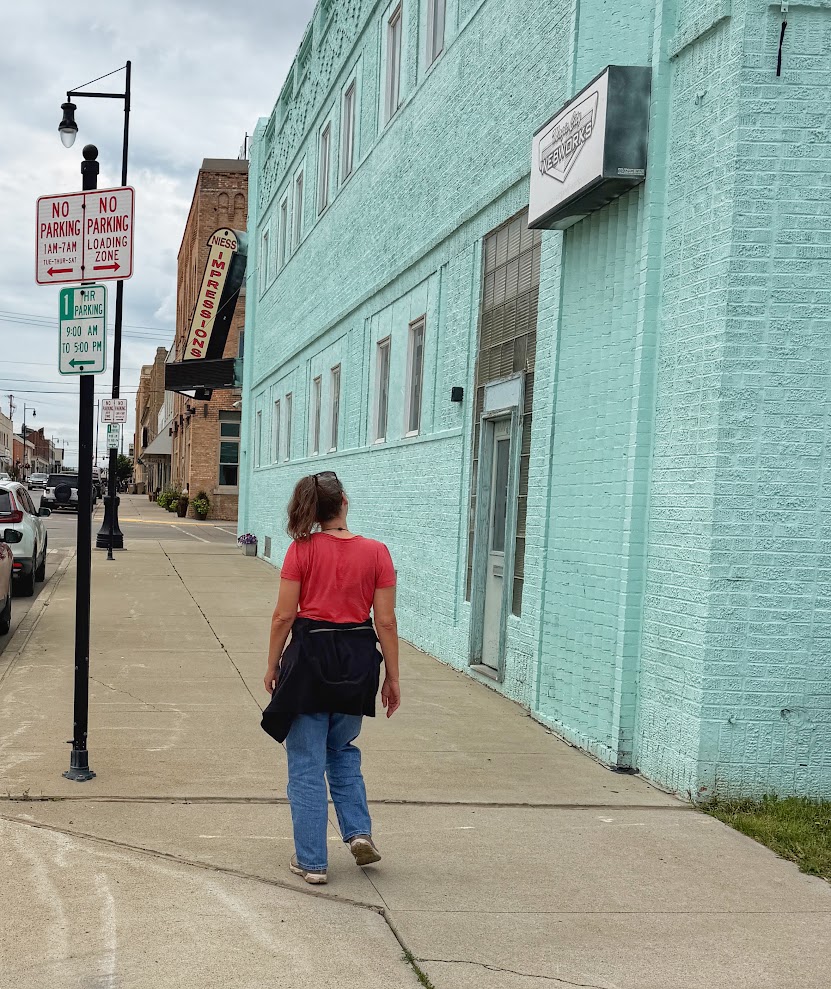


Even after all this time, it pains me to blow through a little town without stopping to check out the one diner with a full parking lot, the charmingly aged grain elevator or shiny new food truck.
Our love of the road is such that we are always looking to the next place. What direction will we head? What new trails or camps or festivals are in our path? And what a joy travel is!


But moving on is also a bit of an addiction. It’s hard to stop for more than a week at a time. And few weeks in one spot can make us a little stir crazy. Travel shapes our days, and our thoughts. It gives us a direction (no pun intended) but it also keeps us from getting things done.
Every new place we park up gets a good long explore. If we are dispersed camping, I can fill several days just wandering around learning the landscape. All this movement is like a job unto itself. And in some very real ways, it keeps me from embarking on more internal explorations, such as fiction writing, or sketching, or volunteering, or keeping up with these journal posts more. And there’s the rub.

6. No Storage Space
There are many frustrations that come with living in a tiny space. You have to pack and re-pack your stuff constantly, declutter hourly, play a sort of tetris to optimize the space in your fridge after each grocery trip.
And you have to make the hard choices when it comes to chatchkas and clothing. Want a souvenir? It best be wafer-thin or perform some useful function.

In our van, every nook and cranny served as storage. And after a time, we developed a system that worked. Sort of. Rarely used items sometimes prompted hour-long hunts and impromptu reorganizations. Every square inch of space was accounted for.
In the blus, we have more room, but we are still working on developing functional storage systems. We lose stuff constantly in our crammed-full closet and in the cavernous and disorganized space under the bed. It can be more than a little frustrating.

But having no storage space is also a perk of the nomadic lifestyle. We don’t accumulate crap we don’t actually need, don’t come out of Walmart with plastic doohickeys and decorative nonesense that will never again see the light of day. Even the most frugal and careful homeowner ends up with unneeded stuff — closets of it! And when we left our home, we carted all this stuff away to the thrift store or dump.

When you have no storage, you really need to firm up your priorities. And there is a freedom in breezing through a store with purpose. No dawdling and considering. We’ve eliminated whole categories of shopping from our lives! We do have some extras– books, tools, rocks(!) But only what can fit in our space. And though it may be counterintuitive, having no extra room makes for a more comfortable lifestyle.

Blessings in Disguise?
So there you have it. Turns out that nomad life is full of contradictions. All the best parts of living on the road are also sort of the worst. Perhaps life, in general, is like that. Partly attitude, partly the yin and yang of everyday living. Probably though, we just hit on a lifestyle that works really well for us. And will keep at it until we are ready for some other sort of adventure.
What are the best and worst parts of your lifestyle? Are they the very same things?

Discover more from Following Our Bluss
Subscribe to get the latest posts sent to your email.